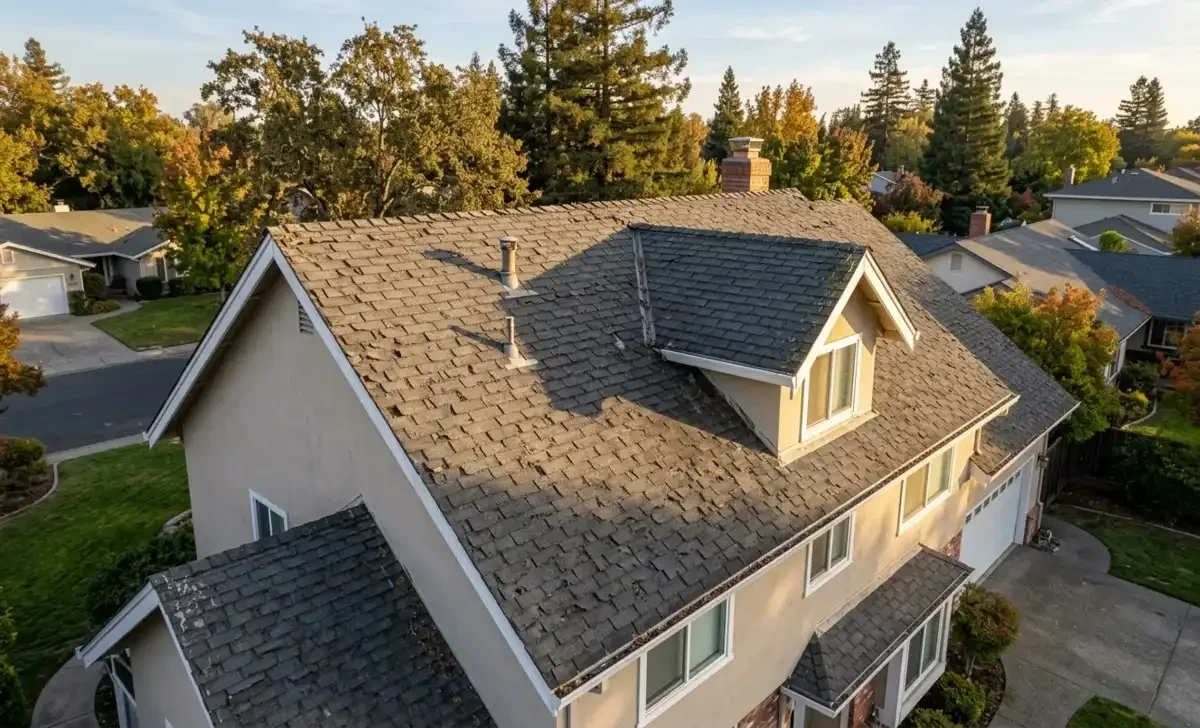
A small ceiling stain might cost $300–$600 to trace and patch. Leave it alone for six months, and you could be looking at rotten decking, ruined insulation, and mould remediation that starts at $2,000 and climbs from there.
That gap is the whole point of this guide. A roof rarely fails all at once — it sends signals for months, sometimes years, before water actually gets inside your home. Recent industry survey data suggests that nearly a quarter of homeowners who replaced their roof said an active leak was the deciding factor, and in most of those cases, smaller warning signs had gone unnoticed long before the leak appeared.
This article walks through the ten most important warning signs, how to inspect your roof from the ground, the interior, and the attic, what different roofing materials are expected to last, and a clear framework for deciding whether you need a repair or a full replacement. By the end, you'll know exactly what to look for and what to do next.
What you'll learn:
- The 10 most critical warning signs, ranked by urgency
- How to inspect your roof from the ground, attic, and interior
- Expected lifespan by roofing material
- The "30% rule" for deciding between repair and replacement
- A step-by-step action plan, including permits and hiring a contractor
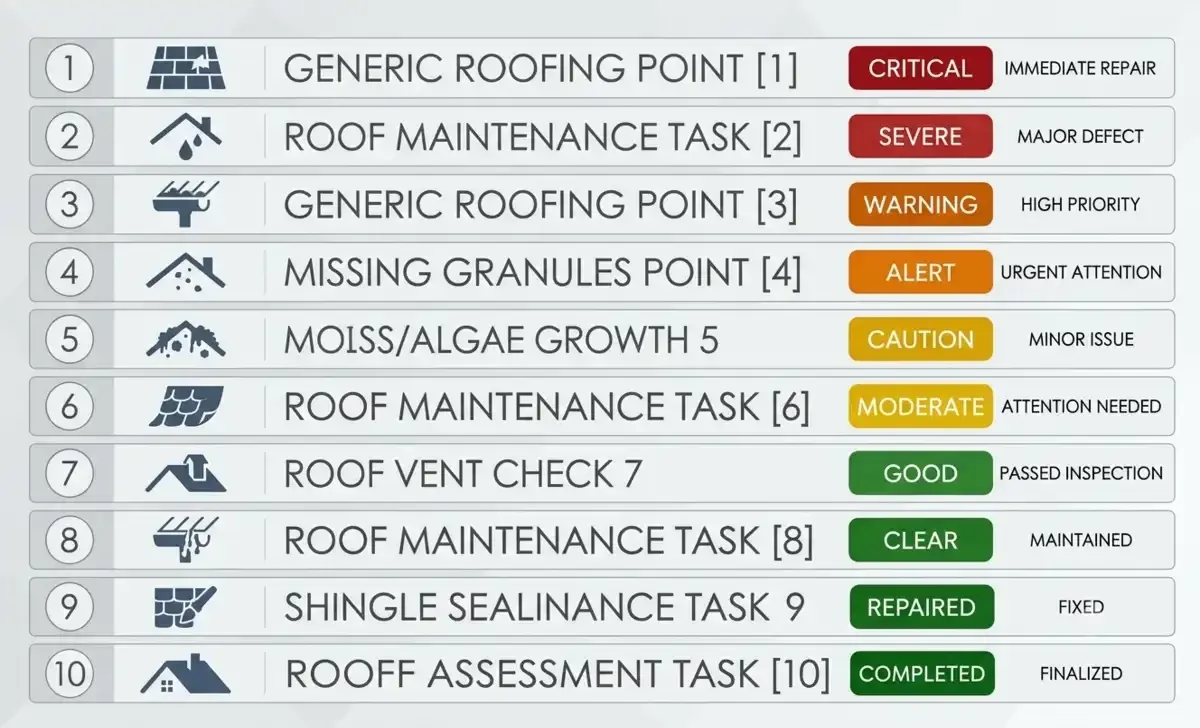
10 Roof Replacement Warning Signs — Ranked by Urgency
Water Stains on Ceilings or Walls
Severity: Critical — active water intrusion
Brown or yellow rings spreading across a ceiling or down a wall are one of the clearest signs that water is already getting through your roof system. The stain isn't always directly below the source — water tends to travel along rafters, sheathing, or pipes before it shows up indoors, so the actual leak point could be several feet away.
This isn't a "keep an eye on it" situation. A small stain caught early might run $300–$600 to trace and patch. Left for six months, you're often looking at rotted decking, soaked insulation, and mould remediation costing $2,000 or more.
Sagging or Drooping Roofline
Severity: Emergency — structural risk
Step back and look at your roofline from the street. A dip, sag, or wavy appearance means the decking underneath is likely absorbing moisture and losing structural integrity. In more advanced cases, the rafters or trusses themselves may be compromised, and a sagging roof can eventually collapse under the weight of ponded water or foot traffic.
This is not something to diagnose yourself. If you notice sagging, get a structural inspection right away.
Missing, Cracked, or Curling Shingles
Severity: High — accelerating deterioration
Look for shingles that are curling up at the edges, cracking in the middle, buckling, or missing entirely. On metal roofs, watch for deformed panel edges instead.
A shingle or two lost in a storm is a quick, inexpensive fix — often under $200. Widespread curling or cracking is a different story: it usually means the material itself has reached the end of its useful life. Curling on standard architectural shingles typically starts around year 15–18, and once it begins, water intrusion often follows within 12–18 months.
Granule Buildup in Your Gutters
Severity: Moderate to high — material degradation
After a rain, check your gutters for dark, gritty debris. Those are the protective granules that shed off asphalt shingles over time. Some granule loss in the first year is normal. Heavy, ongoing accumulation after that points to a shingle mat that's losing its UV protection, which accelerates cracking and failure. If your gutters regularly look like a sandy beach, it's worth a professional look.
Flashing Damage Around Chimneys, Vents, and Skylights
Severity: High — the most common source of leaks
Flashing is the metal strips that seal joints where your roof meets a wall, chimney, skylight, or vent pipe. Cracked, rusted, lifted, or separated flashing creates a direct path for water. It's one of the most common causes of roof leaks — and, caught early, one of the cheapest problems to fix, typically $200–$500 per area. Properly installed flashing should be layered in steps, with each piece directing water over the course of shingles below it rather than relying on a single continuous strip.
Daylight Visible Through the Attic
Severity: High — an active breach in the roof envelope
On a sunny day, head into the attic and turn off the lights. Pinpoints of daylight coming through the roof boards mean water can get in the same way. One caveat: some older homes were built with intentionally spaced roof boards for ventilation, so small gaps alone aren't necessarily a problem. But if you see water stains around those gaps, or warped and darkened wood, your roof is failing.
Moss, Algae, or Dark Streaks
Severity: Moderate — accelerated decay
Green moss patches, black algae streaks, or dark discolouration on the roof surface aren't just cosmetic. Moss holds moisture against the shingle surface and speeds up decay, while algae feeds on limestone filler in the shingles themselves. In humid or heavily shaded areas, unchecked growth can shave meaningful years off a roof's expected lifespan.
Unexplained Spike in Energy Bills
Severity: Moderate — system-wide inefficiency
If your energy bill jumps 15–25% without a rate hike or change in usage, your roof could be part of the problem. Roofing is a major component of your home's thermal envelope, and poor attic ventilation traps heat, forces your HVAC system to work harder, and bakes shingles from underneath — compounding the damage.
Roof Age Exceeding Expected Lifespan
Severity: Variable — depends on material and maintenance
Once your roof passes the 20-year mark, it deserves an annual inspection even if nothing looks obviously wrong. Problems that would be minor on a 10-year-old roof — a small leak, a bit of granule loss — become far more serious on a 20-year-old one, because the underlying materials have less capacity to absorb additional stress.
Your Neighbours Are Getting New Roofs
Severity: Informational — a contextual clue
Homes in the same neighbourhood are often built within a few years of each other, using similar materials and the same builders. If you notice several houses on your street getting new roofs around the same time, it's a reasonable signal that yours may be approaching the same point — worth using as a trigger to schedule an inspection, not as a diagnosis on its own.
Where to Look: A Complete Inspection Guide
Exterior Inspection (From the Ground)
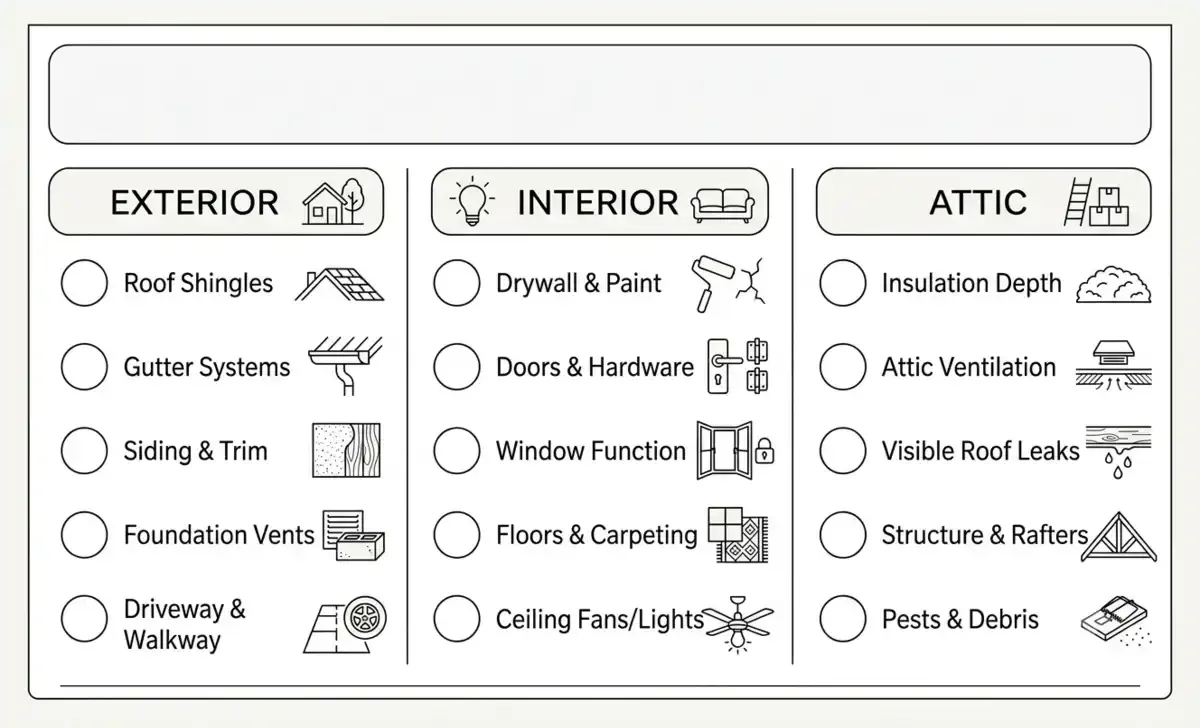
Grab a pair of binoculars and scan your roof from the ground — it's safer than climbing up, and often enough to catch major issues. Look for damaged or missing flashing, curling or missing shingles, sagging sections, dark streaks, moss or algae, granule buildup in the gutters, and the condition of the fascia and soffit. It's worth doing this check after any severe wind or rain event.
Interior Inspection
Walk through your home and check ceilings and walls, especially near roof overhangs, for water stains, cracking, peeling paint, or damp spots. A persistent musty smell can also be an early sign of hidden moisture.
Attic Inspection
This is where the most useful clues often live. Look for visible light through the roof boards, damp or compressed insulation, stained sheathing or rafters, and any frost buildup or condensation. Keep in mind that leaks don't always show up directly below where the water entered — it can travel along framing before becoming visible.
How Long Should Your Roof Last? Lifespan by Material
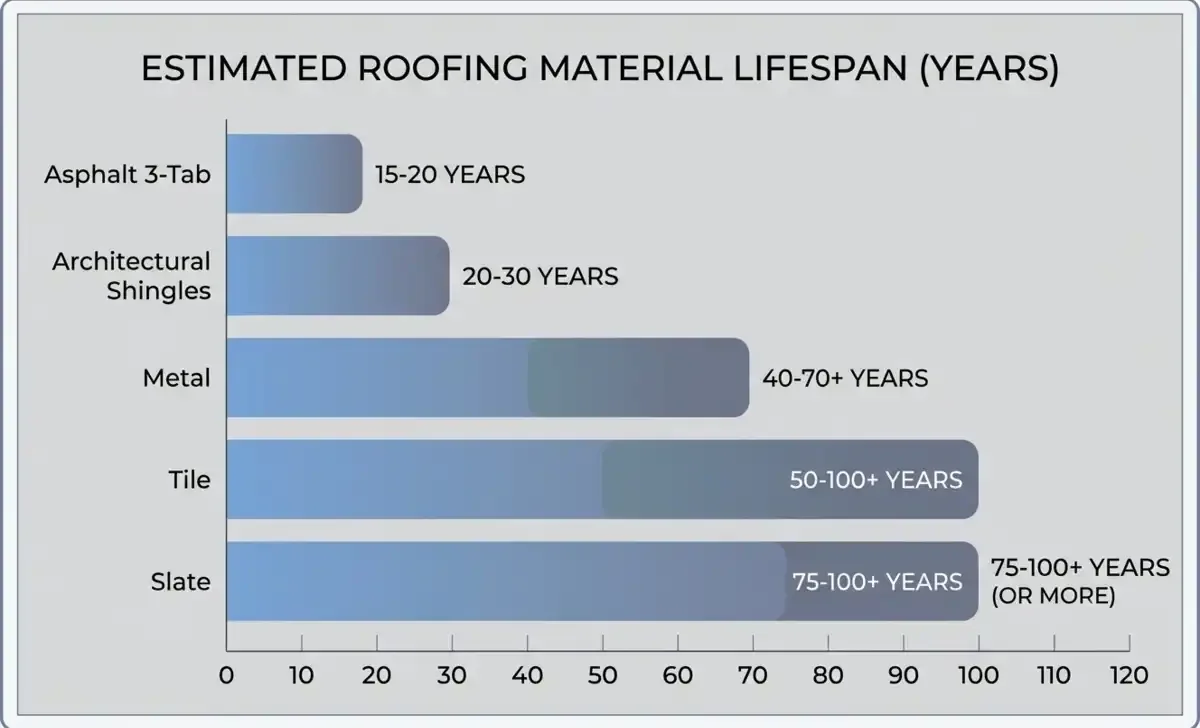
| Roof Material | Average Lifespan | Notes |
|---|---|---|
| Asphalt 3-tab shingles | 15–20 years | Most common and affordable; wears faster in extreme weather |
| Architectural shingles | 25–30 years | Thicker and more durable than 3-tab |
| Metal roofing | 40–70 years | Lightweight and resistant to fire, wind, and rot |
| Clay or concrete tile | 50–100 years | Extremely durable but heavy; may need extra structural support |
| Slate | 100+ years | Very long-lasting, with the highest upfront cost |
A few factors can shorten these lifespans regardless of material: poor attic ventilation, severe weather exposure, standing or ponding water from inadequate drainage, biological growth like moss and algae, and improper installation or skipped maintenance.
Should You Repair or Replace Your Roof? How to Decide
The 30% Rule
A widely used rule of thumb: if a repair estimate exceeds roughly 30% of the cost of a full replacement, replacement is usually the smarter long-term investment. For example, if a new roof would cost $12,000, a repair quote of $4,000 or more is a signal to consider replacing instead.
Repair is usually enough when:
- Damage is minor, and the roof is relatively new
- Only one or two shingles were lost in a storm
- Flashingdamagee is localised
- The roof is still well within its expected lifespan
Replacement is usually the better call when:
- Curling, cracking, or granule loss is widespread
- You're seeing a sagging deck (a structural emergency)
- The roof is nearing or past its expected lifespan
- You're dealing with multiple leaks or frequent repairs
- You plan to stay in the home for 20+ years
- Repair costs are approaching or exceeding the 30% threshold
Your plans matter too. If you're staying long-term, a new roof is an investment in reduced maintenance and better protection. If you're planning to sell soon, a new roof can meaningfully boost curb appeal and resale value.
What Happens When You Ignore Roof Warning Signs
The cost of inaction tends to escalate quickly:
- Immediately: A small water stain appears — patching it typically runs $300–$600
- Around 6 months of neglect: Rotting decking, ruined insulation, and mould remediation can push costs past $2,000
- 12+ months: Structural damage to rafters or trusses, interior drywall repairs, and potential mould-related health concerns
- Worst case: Deck collapse risk, particularly if water is pooling on the roof surface
Beyond direct repair costs, a compromised roof can raise energy bills by 15–25%, reduce your home's resale value, complicate an insurance claim if damage is linked to neglect, and create genuine safety hazards if structural failure occurs.
Spotted a Warning Sign? Here's Your Step-by-Step Action Plan
Document everything. Photograph all visible damage, inside and out, and note the date and any recent severe weather.
Get a professional inspection. A licensed roofing contractor can assess the full scope of the problem. For suspected hidden moisture, ask whether infrared thermography makes sense for your situation.
Get multiple estimates. Aim for at least two or three written quotes, and compare the scope of work, materials, warranty terms, and timeline — not just price.
Understand permit requirements. Re-roofing typically requires a building permit, and requirements vary by location. Some jurisdictions require inspections during the work and a final sign-off once it's complete. In Florida, for instance, replacing 25% or more of a roof's area within 12 months triggers a requirement that the entire system meet current building code.
Choose a contractor and schedule the work. Verify licensing and insurance, check references, and confirm both the manufacturer's and the installer's workmanship warranty. It's also worth asking about energy-efficient roofing options that could lower costs over time.
Don't Wait for a Leak — Act on the Warning Signs Now
A roof rarely fails without warning — it sends signals for months or years before water actually gets inside. Acting on those signals early is almost always the cheaper path: hundreds of dollars now versus thousands later.
If you've noticed any of the ten signs above — a ceiling stain, curling shingles, granules piling up in the gutters, or daylight in the attic — it's worth scheduling a professional inspection. A basic ground-level and attic check costs nothing and can catch the majority of problems while they're still small and manageable.
FAQs
What are the first signs that a roof needs to be replaced?
The earliest signs are usually water stains on ceilings or walls, curling or missing shingles, granule buildup in the gutters, and daylight visible through the attic roof boards. These often appear well before an actual leak develops.
How do I know if my roof needs replacing or just a repair?
If the repair estimate exceeds around 30% of a full replacement's cost, replacement is usually the better investment. Roof age matters too — repairs on a roof nearing the end of its expected lifespan are often just a temporary fix.
How long does a typical roof last?
It depends on the material. Asphalt 3-tab shingles last 15–20 years, architectural shingles 25–30 years, metal roofing 40–70 years, clay or concrete tile 50–100 years, and slate can exceed 100 years.
Can I inspect my own roof?
Yes, for a preliminary check. Use binoculars from the ground to look for shingles and flashing issues or sagging, and check your attic for damp insulation, stained rafters, or daylight through the roof boards. For a full assessment, bring in a licensed professional.
Do I need a permit to replace my roof?
In most areas, yes — re-roofing typically requires a building permit, and some jurisdictions also require progress and final inspections. Requirements vary by location, so check with your local building department.
What does it cost to replace a roof?
Costs vary widely based on material, roof size, location, and complexity. One consistent pattern: ignoring warning signs makes replacement significantly more expensive, since water damage and structural repairs add to the base cost.
Will a new roof lower my energy bills?
It can. A failing roof with compromised ventilation and insulation can raise energy bills by 15–25%. A new roofing system with proper ventilation and insulation can ease the load on your HVAC system and lower monthly costs.