Blinds collect dust quickly, but taking them down feels like a bigger job than it should be. You can clean most blinds without removing them. The key is using the right method for the material. This guide covers Venetian, roller, vertical, Roman, wood, and faux-wood blinds. You will find step-by-step methods, a tool list, and a troubleshooting table for stains.
The core principle is simple: dry first, work from top to bottom, use as little moisture as possible, and dry the blind straight away.
Why Clean Blinds Without Removing Them? (And When Removal Is Still Best)
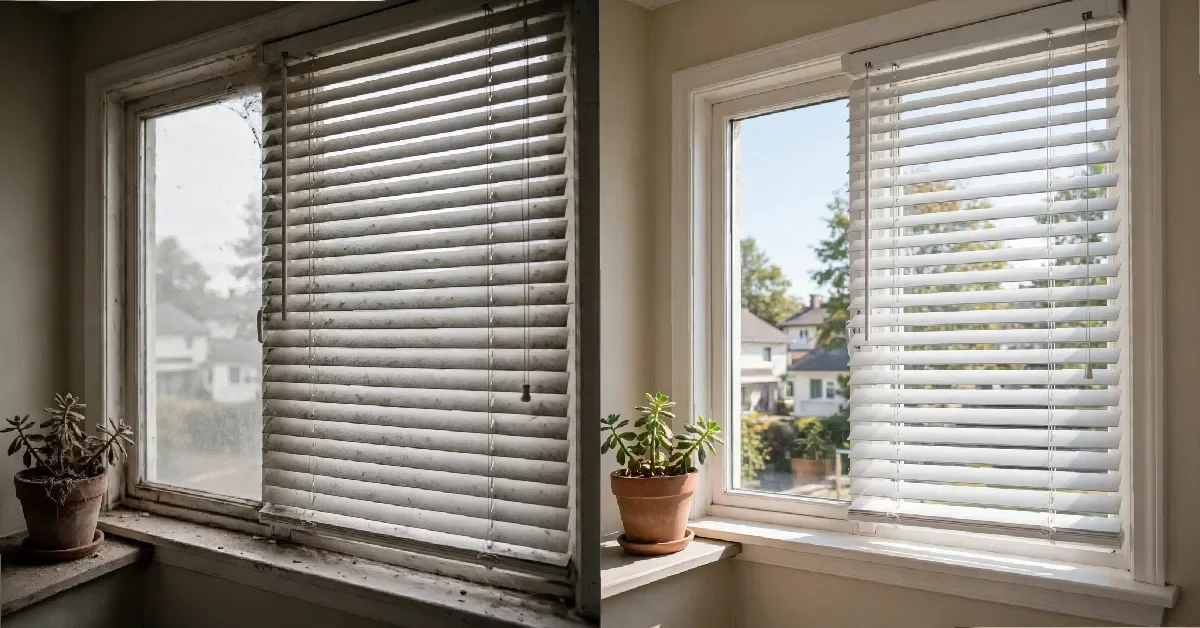
In-place cleaning saves time and avoids the risks that come with taking blinds down. It also suits routine maintenance, which keeps dust from building up to the point where a deep clean is needed. Still, in-place cleaning has limits. Knowing those limits protects your blinds.
Benefits of In-Place Blind Cleaning
Cleaning while the blind stays mounted removes several steps. You do not need to unhook brackets, carry heavy slats through the house, or re-hang everything afterwards. Fewer handling steps mean less risk of bending slats, tangling cords, or knocking out a mechanism. Regular in-place cleaning also makes the job quick enough to fit into a weekly routine.
When You Should Still Remove Your Blinds
Some jobs need the blind down. Remove it if:
- Grease has soaked deep into the slats or fabric.
- Mould has formed behind the headrail or inside the fabric.
- The mechanism, cord, or tilt wand is broken and needs repair.
- The blind is so dirty that surface cleaning will only spread the mess.
If you are unsure, start with a small, hidden area. If the stain does not lift with gentle methods, stop and consider removal or professional cleaning.
Tools and Cleaning Solutions: What You Actually Need
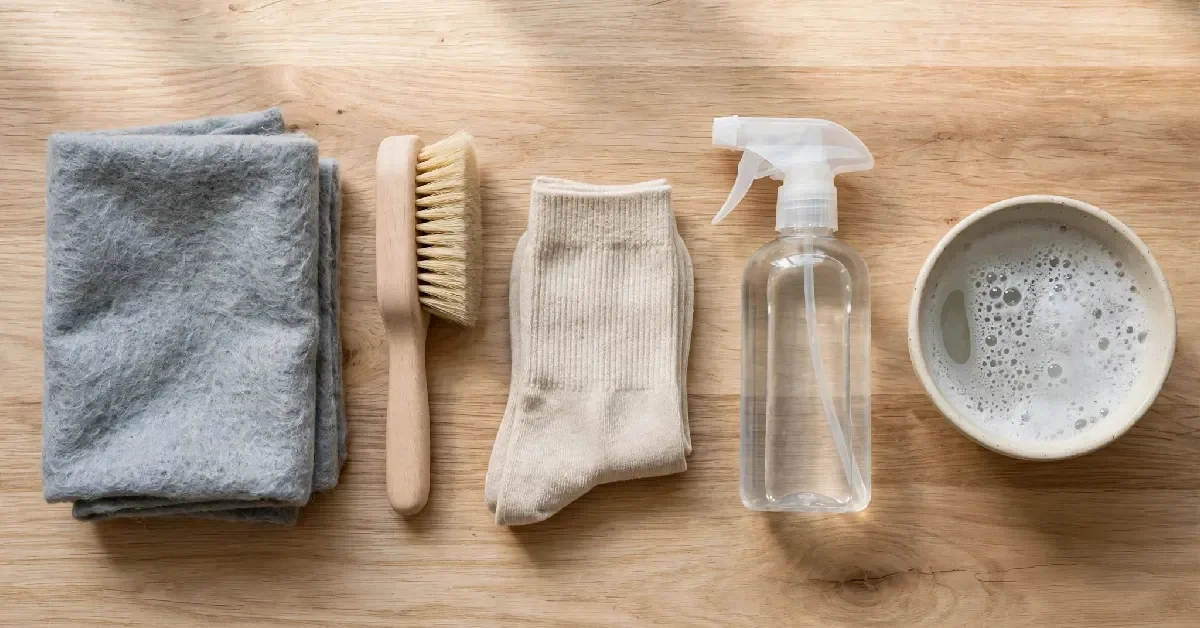
Most of the job needs only a few basic items. Choosing the right tool matters as much as the cleaning solution. A good tool lifts dust off the surface. A poor one pushes it around.
Essential Tools (and What to Avoid)
- Microfibre cloth: Traps dust well and suits most materials.
- Vacuum with a soft brush or upholstery attachment: Lifts dust without scratching. Use the lowest suction setting for fabric blinds.
- Old cotton sock: Fits over your hand for cleaning both sides of a slat at once.
- Soft sponge or clean towel: Handy for spot-cleaning and drying.
Avoid plastic feather dusters. They scatter dust into the air, where it settles on clean surfaces. Also avoid abrasive scourers and stiff brushes, which can scratch slats and leave a dull finish.
Safe Cleaning Solutions by Material
- Mild dish soap in warm water: A safe first choice for metal, vinyl, and faux-wood blinds. Use only a few drops per bowl.
- White vinegar diluted 50/50 with water: Effective on grease in kitchen blinds made of metal, vinyl, or faux-wood. Test first on a hidden area.
- Fabric-safe detergent: Suitable for roller and Roman blinds. Check the care label before use.
- Plain water, barely damp: The safest option for real wood. Keep moisture to an absolute minimum.
Never soak any blind. Avoid bleach and strong solvents, which can discolour or weaken materials.
The Universal No-Removal Method: Dry First, Then Damp
Dust and water make mud. If you wet a dusty blind, the dust turns into a film that is harder to remove. This sequence keeps the dust off clean areas and reduces the moisture the blind absorbs.
Step 1: Close and Flatten the Slats
Turn the tilt wand so the slats close flat. Flat slats give you a clean, even surface. For vertical blinds, let the vanes hang straight and avoid twisting them.
Step 2: Dust or Vacuum from Top to Bottom
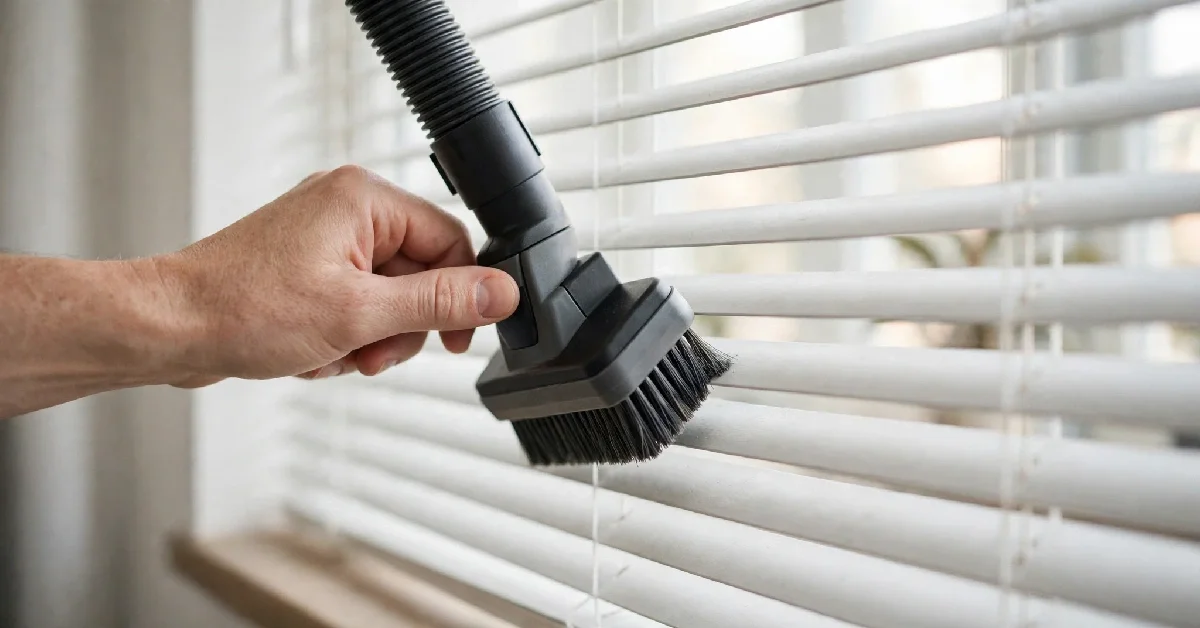
Work from the top of the blind down. Use a microfibre cloth or a vacuum brush on low suction. Working downward means dust falls onto areas you have not cleaned yet, so you can deal with it on the next pass. Work in short, steady strokes.
Step 3: Flip and Repeat
Tilt the slats the other way and repeat the process. Do not skip the reverse side. Dust collects on both faces, and the back of the slat often gets dirtier because it sits closer to the window.
Step 4: Spot-Clean with a Damp Cloth
Dampen a cloth in your soapy solution, then wring it out until it feels damp, not wet. Wipe the marks gently. Blot stubborn spots rather than scrubbing, because scrubbing can wear the finish away.
Step 5: Dry Completely Before Use
Wipe the blind with a clean, dry cloth straight after spot-cleaning. Let it air-dry fully before you roll it up or close the slats tightly. Trapped moisture can cause mould, water marks, and mechanism problems.
How to Clean Venetian and Horizontal Blinds Without Removal
Venetian blinds have many small slats, so they hold a lot of dust. Working slat by slat takes time, but a few simple habits make the job faster.
Dry Dusting and Vacuuming Venetian Blinds
Close the slats, then dust from the top down. Use a microfibre cloth, or a vacuum with a brush attachment for heavier dust. Flip the slats and repeat. Doing this once a week keeps dust under control between deeper cleans.
The Sock Method for Two-Sided Cleaning
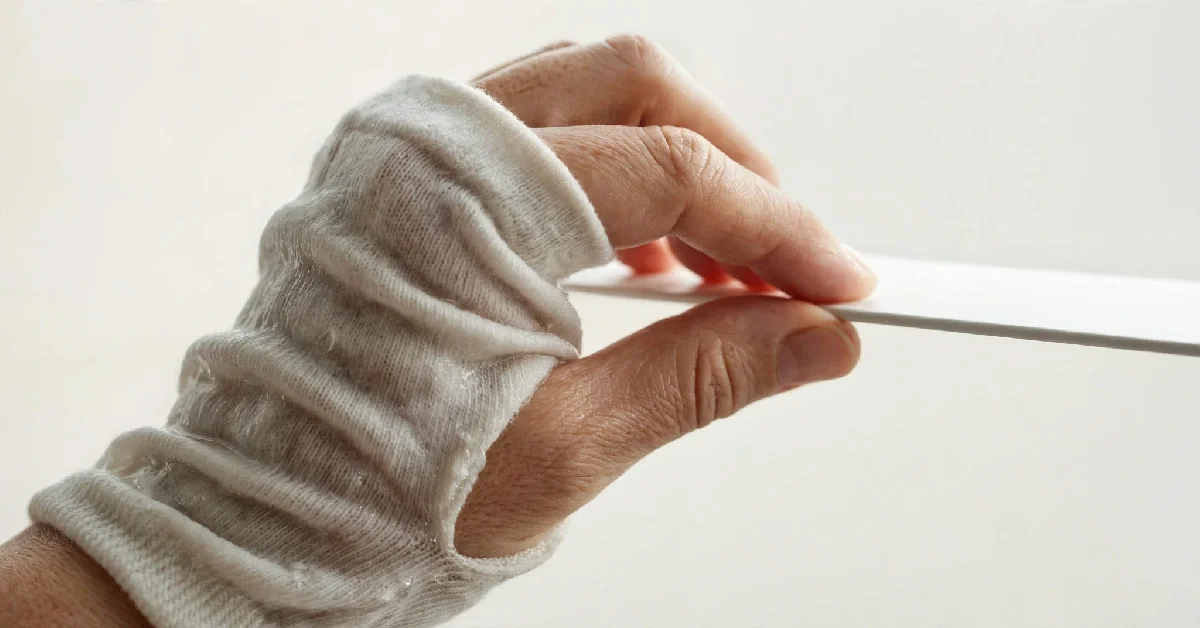
The sock method cleans both sides of a slat in a single pass. Put a clean cotton sock over your hand, dampen it lightly, and pinch each slat between your thumb and fingers. Slide from one end of the slat to the other. The method is fast, but keep the sock barely damp. Too much water can warp the slats or leave marks.
Removing Marks and Stains from Venetian Blinds
Use a barely damp cloth with a drop of mild dish soap. Support the slat from behind with your other hand so it does not bend. Wipe the mark, then dry the area at once. Avoid scrubbing matte finishes, because scrubbing can leave a shiny patch.
How to Clean Roller Blinds Without Removal
Roller blinds are simple to clean in place because the fabric lies flat when fully lowered. The main risk is water marks, so keep the cloth barely damp and let the blind dry completely before rolling it up.
Routine Dusting and Vacuuming
Lower the blind fully. Vacuum with an upholstery attachment on low suction, using short strokes from the top to the bottom. Vacuuming weekly stops dust from working into the weave.
Spot-Cleaning Roller Blind Fabric
Test a hidden area first, such as the lower edge at the back. Use a fabric-safe detergent in lukewarm water. Blot the mark gently rather than rubbing. Do not soak the fabric, because moisture can leave rings or cause the backing to separate.
Drying and Preventing Mould
Let the blind air-dry fully. Open a window or run the room fan if the air feels humid. Never roll up a damp roller blind, because trapped moisture encourages mould on the fabric and the roller.
How to Clean Vertical Blinds Without Removal
Vertical blinds need careful handling. Pushing or pulling the vanes can unhook them from the track, so work gently and keep the vanes hanging straight.
Fabric Vertical Blinds
Vacuum with a soft brush attachment on low suction, working from top to bottom. Brush gently to lift dust from the fabric. For marks, use a fabric-safe detergent on a barely damp cloth, then blot dry.
PVC and Rigid Vertical Blinds
Wipe each vane with a damp cloth and a little mild soapy water. Dry each vane straight away with a clean towel. Pay extra attention to the edges, where dust often builds up.
How to Clean Roman and Fabric Blinds Without Removal
Roman shades have folds that trap dust. Clean them with care so the fabric keeps its shape and colour.
Dusting and Vacuuming Roman Shade Folds
Lower the shade fully. Vacuum across the folds, then inside each fold, using the upholstery attachment on the lowest suction. Support the fabric with your free hand so it does not stretch. Check the care label before using any liquid, and follow it if it lists a cleaning method.
Spot-Cleaning Fabric Blinds Safely
Test a hidden area first. Use as little moisture as possible. Blot the stain rather than rubbing it, then air-dry the blind fully. If the label says "dry clean only," do not use water at all.
Cleaning Wood and Faux-Wood Blinds Without Damage
Wood reacts badly to water. Faux-wood and composite blinds handle moisture better, but they still need careful drying. Dust these blinds often, because routine dusting prevents the need for wet cleaning.
Real Wood Blinds: Minimal Moisture Only
Dry-dust first with a microfibre cloth. For a mark, use a cloth wrung out until almost dry. Wipe along the grain, then dry the slat immediately with a clean towel. Never soak real wood. Prolonged moisture can cause warping and damage the finish.
Faux-Wood and Composite Blinds
These blinds tolerate a little more moisture, and a mild soapy solution works well for grease. Still dry them after cleaning, and avoid abrasive cleaners, which can dull the surface.
Stain and Grease Troubleshooting (Without Removal)
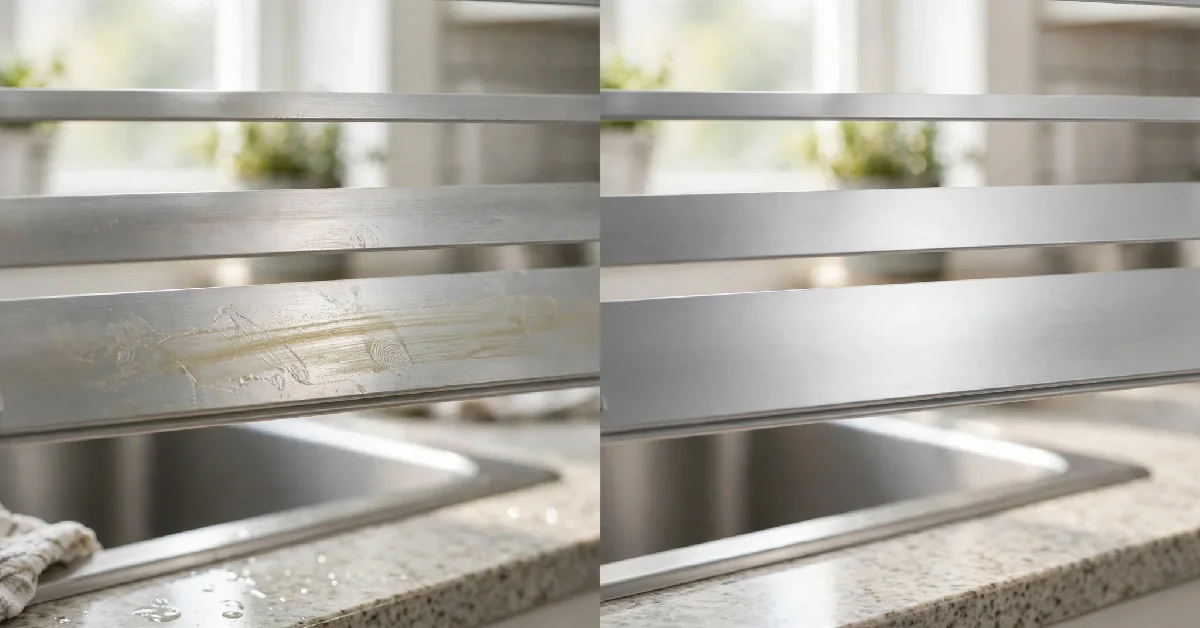
Kitchen blinds collect grease from cooking. Bathroom blinds collect water marks and soap residue. Use the table below to choose a treatment. Always test on a hidden area before you start.
| Stain type | Suggested solution | Method | Caution |
|---|---|---|---|
| Kitchen grease (metal, vinyl, faux-wood) | Vinegar diluted 50/50 with water | Barely damp cloth, wipe, then dry | Do not use on real wood |
| Sticky residue | Mild dish soap in warm water | Blot, then wipe with a clean, damp cloth | Avoid scrubbing matte finishes |
| Water marks | Clean, dry cloth | Blot the area and dry immediately | Prevent further moisture contact |
| Dust film on fabric | Upholstery brush on low suction | Vacuum from top to bottom | Do not press the brush hard |
| Fabric stain | Fabric-safe detergent | Blot with minimal moisture, then air-dry | Test first; avoid soaking |
If a stain does not lift after two gentle attempts, stop. Repeated scrubbing can damage the surface. At that point, consider removing the blind or getting professional advice.
How Often Should You Clean Blinds in Place?
Dust builds up at different rates depending on the room. A simple routine keeps blinds clean without much effort.
Routine Dusting Schedule
Dust or vacuum blinds once a week. Use a quick visual check to spot marks early. This habit prevents most build-up.
Deeper Cleaning Frequency by Room
- Kitchen and bathroom: Clean more often, usually every few weeks, because of grease and humidity.
- Bedroom and living room: A deeper clean every two to three months is usually enough.
- Conservatory: Clean seasonally, as heat and sunlight can make dust and grime stick.
Blinds and Indoor Air Quality
Dusty blinds can add to the allergen load in a room. If you or someone in your home has allergies, use these habits:
- Vacuum with a HEPA-filter vacuum where possible, because standard filters can release fine dust back into the air.
- Use a damp cloth for the final pass, since damp cloths trap dust rather than lifting it.
- Clean while the room is empty, and leave the room for a short time afterwards so dust can settle.
- Ventilate the room once cleaning is finished.
Conclusion
Cleaning blinds in place is a realistic routine for most homes. Close the slats, dust or vacuum from top to bottom, flip, spot-clean with minimal moisture, and dry thoroughly. Adjust the method for your blind type, and watch for wood and fabric, which need the most care.
Dust weekly and give blinds a deeper clean every few months. Kitchen and bathroom blinds may need attention more often.
If blinds are heavily soiled, mouldy, or damaged, removal or professional cleaning may be the safer choice. Start with one window this week. A microfibre cloth and a clean sock are all you need to begin.
FAQs
Can you clean blinds without taking them down?
Yes. Most blinds can be dusted, vacuumed, and spot-cleaned while mounted. Heavy soiling, mould, or a broken mechanism may still need removal or professional help.
What is the fastest way to clean blinds without removal?
Close the slats, then dust or vacuum from top to bottom using a microfibre cloth or a brush attachment. Flip the slats and repeat. A damp sock over your hand speeds up cleaning both sides at once.
Can you use vinegar to clean blinds without removing them?
Yes, for metal, vinyl, and faux-wood blinds. Use a 50/50 mix of white vinegar and water on a barely damp cloth, then dry the blind straight away. Avoid vinegar on real wood.
How do you clean wood blinds without removing them?
Dust them often. For marks, use a cloth wrung out until almost dry, then dry the slats immediately. Never soak wooden blinds, because moisture can cause warping.
How do you clean both sides of blind slats without removal?
Close the slats flat and clean one side. Tilt the slats the other way and clean the second side. A damp sock lets you grip both faces at once.
Do you need to remove roller blinds to clean them?
No. Lower the blind fully, vacuum it with an upholstery attachment, and wipe marks with a barely damp cloth. Let it air-dry completely before rolling it up.