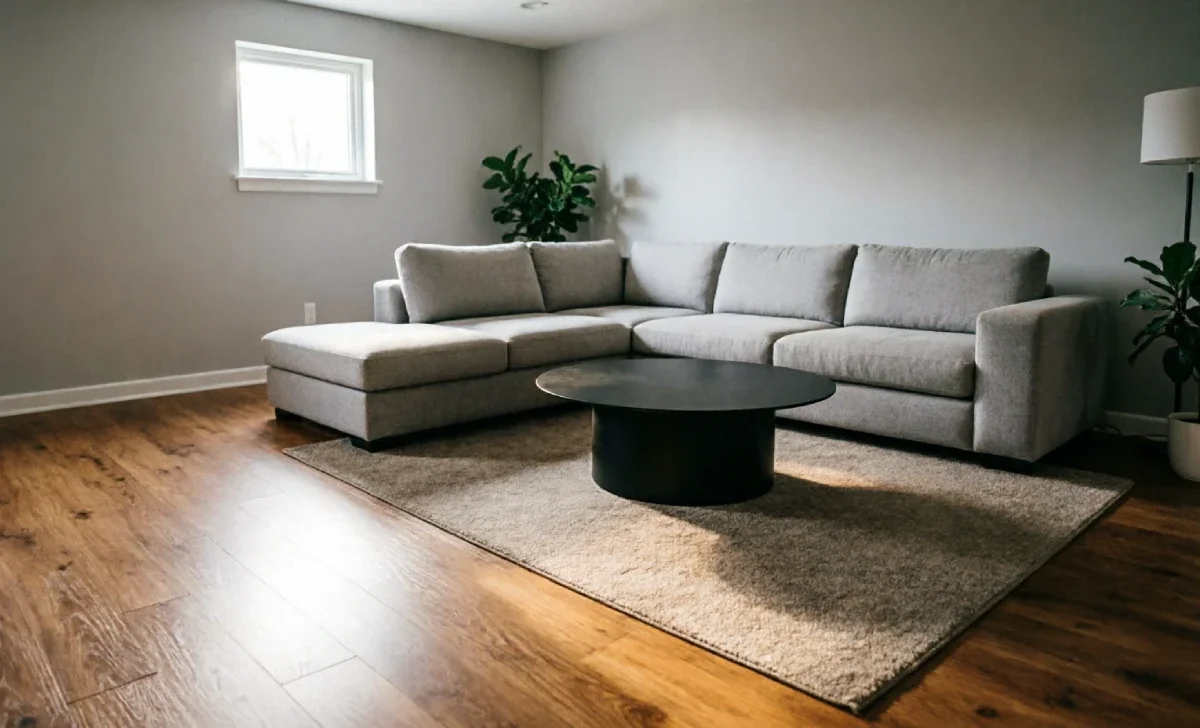
Your basement floor deals with a different reality than the rest of your house. Concrete slabs trap moisture, humidity swings through the seasons, and a small leak can ruin the wrong material overnight. That is why picking the best flooring for basements starts with moisture, not looks.
This guide walks you through the strongest basement flooring options for 2026, how to match them to each room, and what installation actually involves. By the end, you will know exactly which floor fits your space and your budget.
What Makes a Flooring Material Good for a Basement
A good basement floor resists moisture and water first, appearance second. It needs to handle temperature swings and humidity without warping, cupping, or trapping mold underneath.
Durability matters too, since basements often double as gyms, playrooms, or storage. Comfort, sound control, and low VOC emissions round out the list for spaces where people actually spend time.
Check Basement Moisture Before Choosing Flooring
Fix any visible leaks or water intrusion before you buy a single plank. A slab moisture test tells you how much vapor is coming up through the concrete, and that number decides which materials are even an option.
A waterproof label on a box does not mean your whole basement floor system is protected. Moisture can still travel through the slab and damage subfloor, adhesive, or underlayment even when the surface material itself is waterproof. A proper vapor barrier and repairs to any uneven or damaged concrete come before installation, not after.
Best Flooring Options for Basements
Rigid Core Luxury Vinyl Plank (SPC)
Rigid core vinyl plank, often called SPC, is the strongest all-around choice for most finished basements. It is fully waterproof, floats directly over concrete, and comes in realistic wood and stone looks. Cleanup is easy, individual planks are simple to replace, and it works well in family rooms, offices, and home theaters.
Porcelain or Ceramic Tile
Tile offers the highest water resistance of any basement flooring, which makes it the top pick for bathrooms, laundry rooms, and flood-prone areas. It feels cold underfoot unless paired with radiant heating, and grout lines need occasional maintenance, but nothing beats it for pure moisture protection.
Epoxy Flooring
Epoxy creates a seamless, chemical-resistant surface that suits workshops, gyms, and utility spaces. It needs proper surface preparation and does not handle hydrostatic pressure well, so it is not the right call in basements with active water intrusion.
Polished or Finished Concrete
If your slab is in good shape, polishing or staining it turns your existing floor into a finished one. It is extremely durable, tolerates flooding better than almost anything else, and gives a modern industrial look, though it stays hard and cold underfoot.
Waterproof Laminate
Modern waterproof laminate gives you a realistic wood look at a lower cost than vinyl. Many products still use a wood-based core underneath the surface layer, so moisture reaching the seams or coming up from below remains a real risk. Save it for basements where moisture is already fully controlled.
Carpet and Carpet Tiles
Carpet brings warmth and softness that hard flooring cannot match, which makes it a favorite for bedrooms and media rooms. It only belongs in genuinely dry basements, since it holds moisture and can develop mold quickly if water gets underneath it. Carpet tiles are a practical middle ground because you can replace individual squares instead of the whole floor.
Engineered Hardwood
Engineered hardwood gives you a real wood surface with more dimensional stability than solid hardwood. Even so, 2026 guidance is more cautious about using it below grade than it used to be. Check manufacturer approval and confirm moisture conditions before committing to it in a basement.
Rubber Flooring
Rubber flooring handles moisture well and absorbs impact, which makes it the natural choice for home gyms. It comes in interlocking tiles or rolls, cleans easily, and holds up under heavy equipment, though some products carry a noticeable odor when new.
Basement Flooring Options to Avoid
Solid hardwood and traditional laminate both struggle with basement humidity and moisture from below. Carpet in a damp or flood-prone basement is asking for mold. Skip any product without clear below-grade installation approval, and never install flooring over moisture problems you have not solved yet.
Best Basement Flooring by Room
| Basement Space | Best Flooring |
|---|---|
| Family room | Rigid core LVP or SPC |
| Home theater | LVP, carpet, or carpet tiles |
| Home gym | Rubber, cork, or polished concrete |
| Bathroom | Porcelain tile or waterproof vinyl |
| Laundry room | LVP or SPC, tile, or epoxy |
| Workshop | Epoxy or polished concrete |
| Home office | LVP or SPC, or waterproof laminate |
| Guest bedroom | LVP, carpet, or approved engineered wood |
| Basement bar | LVP or SPC, tile, or polished concrete |
| Flood-prone area | Porcelain tile, epoxy, or waterproof flooring |
How Much Does Basement Flooring Cost in 2026
Material costs vary widely by product, but rigid core vinyl and laminate usually sit at the lower end, tile and epoxy in the middle, and engineered hardwood toward the top. Installation adds a separate cost, and it climbs if you need subfloor, underlayment, or a vapor barrier first.
Moisture mitigation, slab leveling, and repair work can add a meaningful amount before you even lay flooring. Prices vary by location and contractor, so treat these as general ranges rather than fixed numbers. The cheapest option upfront often costs more later if it fails against moisture.
How to Install Flooring Over a Concrete Basement Floor
- Fix any water intrusion first.
- Check the overall condition of the slab.
- Run a moisture test on the concrete.
- Level or repair damaged areas.
- Choose the correct vapor or moisture barrier.
- Install underlayment or subfloor if the product requires it.
- Let the flooring acclimate if the manufacturer calls for it.
- Install according to the manufacturer's exact specifications.
- Leave the required expansion gaps around the edges.
- Inspect the finished floor for gaps or unevenness.
How to Choose the Best Basement Flooring for Your Home
If moisture is your biggest concern, go with porcelain tile, epoxy, or a suitable waterproof rigid core product. If you want the best overall balance of looks, durability, and moisture resistance, SPC or LVP is the safest bet.
If comfort matters most and your basement is genuinely dry, carpet or carpet tiles deliver that. If you want a wood look, choose rigid core vinyl first and only consider waterproof laminate once you have confirmed the moisture conditions support it. For a home gym, rubber or cork wins on comfort and grip, and for low maintenance across the board, epoxy, polished concrete, tile, or rigid core vinyl all perform well.
Tips for Buying Basement Flooring
Confirm the product is officially approved for below-grade installation before you buy it. Read the waterproof and moisture resistance claims carefully, since wording varies a lot between brands. Check the warranty terms, look for FloorScore or a similar indoor air quality certification, and buy extra material from the same dye lot for future repairs. Always follow the manufacturer's stated moisture limits for the concrete slab.
Frequently Asked Questions About Basement Flooring
What is the best flooring for a basement?
Rigid core SPC or LVP is the best overall choice for most finished basements because it is fully waterproof, stable on concrete, and works in almost any room.
Is waterproof laminate good for basements?
It can work, but only in basements with confirmed dry conditions, since many waterproof laminate products still use a wood-based core that is vulnerable at the seams.
Do you need a vapor barrier under basement flooring?
In most cases, yes, since a vapor barrier blocks moisture rising through the concrete slab from reaching your flooring, subfloor, or adhesive.
Can you install hardwood in a basement?
Solid hardwood is not recommended below grade. Engineered hardwood is sometimes possible, but only with manufacturer approval and verified low moisture levels.
What is the most waterproof basement flooring?
Porcelain tile and epoxy offer the highest water resistance of any basement flooring option, which makes them the top picks for bathrooms, laundry rooms, and flood-prone spaces.
Final Verdict on Basement Flooring for 2026
Rigid core SPC or LVP remains the best overall pick for most finished basements. Porcelain tile or epoxy takes the lead where moisture exposure is severe, carpet or carpet tiles work for comfort in dry spaces, and rubber or cork suits home gyms best. Whatever you choose, solve your moisture problem first and pick your flooring second.