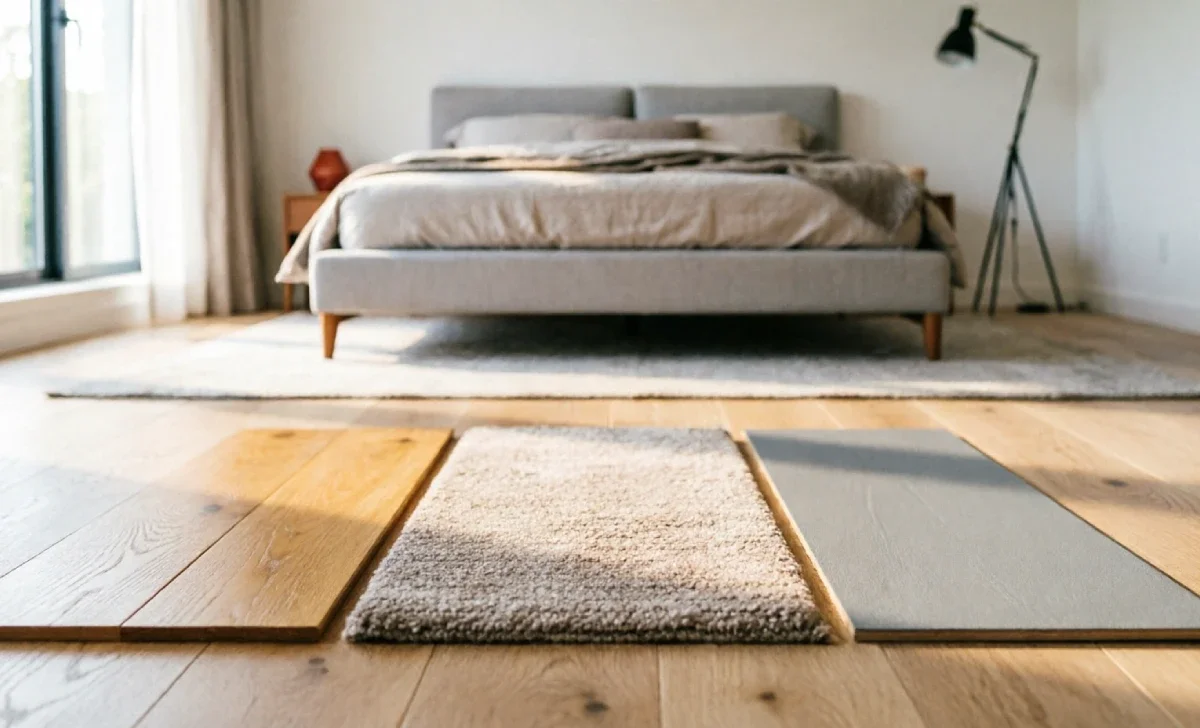
Your feet touch the bedroom floor before anything else touches your day. That first step out of bed sets the tone, so the material under it matters more than most homeowners realize. Bedrooms don't see the same foot traffic as a kitchen or hallway, which means comfort and design can take priority over raw durability.
This guide covers the best flooring for bedrooms in 2026, from soft carpet to warm engineered wood. You'll learn which materials work for different bedroom types, budgets, and climates, plus the trends shaping bedroom design this year.
What Is the Best Flooring for a Bedroom?
No single flooring is best for every bedroom. The right choice depends on your priorities.
Carpet gives you the most softness, warmth, and noise reduction. Hardwood or engineered wood brings timeless style and long-term value. Luxury vinyl plank offers easy maintenance and moisture resistance with a realistic wood look. Laminate delivers an affordable wood-style finish, and cork adds natural softness with a distinctive texture.
Your lifestyle, local climate, bedroom type, and budget will point you toward the right match.
Best Flooring for Bedrooms: 7 Top Options
Carpet remains the go-to for cozy bedrooms. It's warm underfoot and absorbs sound, which matters in a room built for rest. Cut-pile carpet feels plush and soft, while loop-pile holds up better over time. Textured, neutral tones are leading carpet trends in 2026. The tradeoff is cleaning, since carpet traps dust and stains more easily than hard surfaces.
Hardwood flooring brings a natural warmth and a look that rarely goes out of style. Oak, maple, and walnut are the most common species, available in strip, plank, or parquet layouts. A rug at the bedside adds softness without sacrificing the wood's appearance. Hardwood can also be refinished, so it holds its value for decades.
Engineered wood gives you a real-wood surface with more stability. Its layered construction resists the expansion and contraction that solid wood faces with humidity swings. Wide-plank, matte finishes with visible natural grain are the standout trend right now. It costs less to install than solid hardwood while still looking authentic.
Luxury vinyl plank (LVP) has become a practical favorite. It mimics wood and stone convincingly, resists moisture, and cleans up fast. Paired with the right underlayment, it can feel more comfortable underfoot than you'd expect from a vinyl product. It won't match real hardwood in resale value, but for busy households, the tradeoff often makes sense.
Laminate flooring delivers a wood-inspired look at a lower price point. It resists scratches well, and many homeowners install it themselves. It feels harder underfoot than carpet or vinyl, and standing water can be an issue for standard laminate. A rug near the bed solves both the comfort and warmth gap.
Cork flooring is the quiet alternative most people overlook. It's soft, naturally warm, and absorbs sound better than almost any hard flooring type. The texture and appearance stand apart from typical wood or vinyl looks. It does need attention to moisture and requires occasional resealing.
Tile and stone rarely suit bedrooms, since they run cool and hard underfoot and can amplify noise. They still work in specific design styles, like Mediterranean, Spanish, or Moroccan bedrooms. A large rug or underfloor heating can offset the cold factor if you love the look.
Carpet vs. Hardwood for a Bedroom
Carpet wins on warmth and softness, hands down. Hardwood wins on long-term durability and design flexibility, since it works with almost any decor style.
For noise, carpet naturally dampens footsteps and furniture sounds. Hardwood is louder unless you add rugs or a solid underlayment. Carpet needs more frequent cleaning and eventually needs replacing, while hardwood can be refinished and can last generations. If comfort is your top priority, choose carpet. If you want a floor that adapts as your style changes, hardwood is the safer long-term bet.
LVP vs. Laminate for Bedrooms
Both mimic wood convincingly, but LVP handles moisture and spills far better than laminate. Laminate can feel slightly more natural underfoot in some product lines, though the difference is small.
LVP also resists everyday wear better and installs with fewer seams for water to seep through. Laminate tends to cost less upfront, which matters for larger bedrooms or multi-room renovations. If your home deals with humidity or you want lower long-term maintenance, LVP is the stronger pick.
How to Choose Bedroom Flooring
Start with barefoot comfort, since you'll walk on this floor daily without shoes. Carpet and cork feel the softest, while tile and hardwood feel the coolest and firmest.
Think about noise next. Footsteps and furniture movement carry more on hard floors, so rugs or a quality underlayment help quiet things down. Match the flooring to your interior style, whether that's a modern minimalist look or a rustic, Scandinavian feel. Wider planks and lighter tones tend to make a room feel more open.
Set a realistic budget that includes both materials and installation, not just the per-square-foot cost you see online. Factor in how much time you're willing to spend on maintenance, since carpet demands more upkeep than sealed hard flooring. Finally, consider moisture. Even bedrooms near a bathroom or in a humid climate benefit from moisture-resistant materials like LVP or engineered wood.
Bedroom Flooring Trends for 2026
Warm, honey-toned wood colors are replacing the cooler gray tones that dominated the past few years. Wide-plank flooring continues to gain ground because it makes rooms feel larger and more open.
Matte finishes with visible natural grain are outpacing high-gloss looks. Herringbone and parquet patterns are showing up more in bedrooms for added character. Textured flooring paired with layered rugs, sometimes called texture-maxxing, is one of the standout looks designers are pointing to this year. Realistic wood-look LVP and laminate are also closing the gap with real wood in both appearance and feel.
How to Make Hard Bedroom Floors Feel Warmer
A rug beside or beneath the bed is the simplest fix for a cold hard floor. The right underlayment adds cushioning and reduces the chill you feel through vinyl or laminate.
Engineered wood and cork both offer a softer, warmer feel than tile or solid hardwood. Warm flooring tones, like honey oak or walnut, also make a room feel cozier even without added texture. In colder climates, underfloor heating is worth considering under tile or stone.
Frequently Asked Questions
What is the most comfortable flooring for a bedroom?
Carpet is generally the most comfortable choice, since it stays warm underfoot and cushions every step. Cork comes close behind it for homeowners who want a hard surface with a soft feel.
Is hardwood flooring good for bedrooms?
Yes. Hardwood brings natural warmth, a timeless look, and long-term durability. Adding a rug beside the bed solves the only real downside, which is a firmer, cooler feel than carpet.
Is LVP a good choice for bedrooms?
LVP works well for bedrooms that need low maintenance and moisture resistance. It also gives you a realistic wood or stone look without the upkeep that real hardwood requires.
Is carpet or hardwood better for a bedroom?
Neither is universally better. Carpet suits homeowners who want maximum softness and quiet, while hardwood suits those who prioritize long-term style and easy upkeep.
What flooring is best for a child's bedroom?
Look for easy cleaning, durability, and a soft landing for little feet. LVP or a durable carpet blend usually strikes the right balance for a kid's room.
Final Verdict: Which Bedroom Flooring Should You Choose?
The right bedroom floor comes down to comfort, style, noise, maintenance, climate, and budget, in that order of priority for most homeowners. Choose carpet if coziness matters most to you. Choose hardwood or engineered wood if you want a timeless look that holds its value. Choose LVP if practicality and easy cleaning top your list, or laminate if you're working with a tighter budget.
Before you commit, bring home a few samples and look at them in your actual bedroom lighting. The right floor should feel as good as it looks, every time you step out of bed.