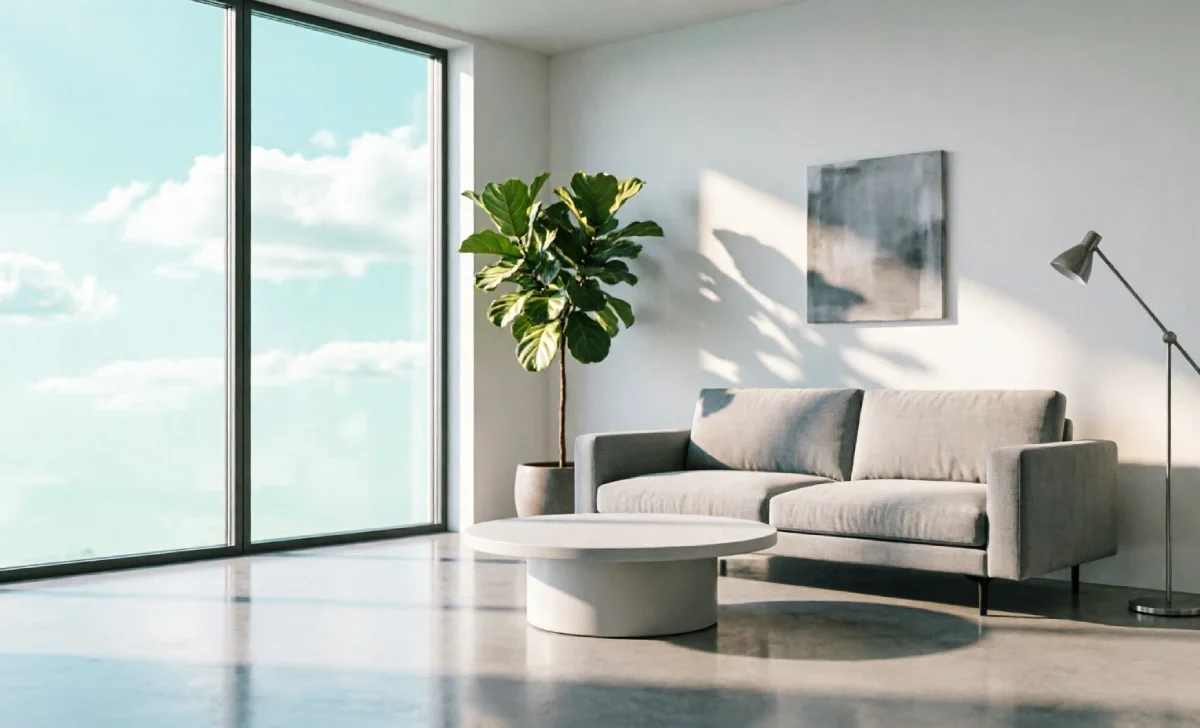
Concrete flooring is no longer just for garages and warehouses. Homeowners now choose it for kitchens, living rooms, and even bathrooms. It offers a tough surface with a clean, modern look.
This guide walks you through the main types of concrete flooring, what it costs in 2026, and where it works best. You will also learn how it compares to other flooring options and how to keep it looking sharp for years.
What Is Concrete Flooring?
Concrete flooring uses a poured or existing slab as the finished floor surface, instead of covering it with wood, tile, or carpet. Traditional concrete is basic. Modern polished concrete is refined through grinding and sealing, giving it a smooth, reflective finish.
You can convert an existing slab into a finished floor or pour a new one. Concrete now shows up in kitchens, living rooms, bathrooms, and open-plan spaces where a seamless look fits the design.
Types of Concrete Flooring
Poured Concrete Flooring
Poured concrete works well in open-plan homes and spaces that connect indoors to outdoors. It creates one continuous surface without seams or transitions. Professional installation matters here, since getting the mix, finish, and curing right takes skill and equipment.
Polished Concrete Flooring
Polished concrete goes through a grinding and polishing process that smooths the surface and brings out a shine. You can choose a matte, honed, or high-gloss finish. Color, staining, and aggregate exposure let you customize the look to match your space.
Concrete Floor Tiles
Concrete tiles offer more flexibility than a poured slab. If one tile cracks or wears out, you can replace it without redoing the whole floor. Installation still requires proper sealing to protect against stains and moisture.
Concrete-Effect Porcelain Tiles
If you like the concrete look but want a lower-cost or easier-to-install option, concrete-effect porcelain tiles are worth a look. They mimic the texture and tone of real concrete and work indoors and outdoors.
Concrete Flooring Finishes and Design Options
Concrete flooring offers more design range than most people expect. Options include polished, stained, and dyed finishes, along with smooth or textured surfaces. You can also choose exposed aggregate, scored patterns, or decorative designs.
Matte and glossy sheens change the mood of a room. Polymer-based overlays and microtoppings add another layer of customization without replacing the entire slab.
Concrete Flooring Cost in 2026
Concrete flooring costs vary based on the finish, the condition of the existing slab, and the complexity of the design. Basic concrete flooring generally runs from 3 to 7 dollars per square foot. Polished concrete costs more, typically landing between 4 and 20 dollars per square foot depending on customization.
Most standard polished concrete projects fall in the 3 to 15 dollars per square foot range. Highly customized jobs with intricate patterns or specialty finishes can push past 20 dollars per square foot.
What Affects the Price
Several factors drive the final cost of a concrete floor:
- Floor size and layout
- Condition of the existing floor
- Surface preparation needs
- Amount of grinding required
- Number of polishing passes
- Staining, dyeing, or coloring
- Custom patterns or designs
- Sealer and protective coatings
- Labor costs in your area
- Underfloor heating installation
Extra grinding passes and complex custom designs can raise the price significantly, so get a detailed quote before committing to a specific finish.
Concrete Flooring Pros and Cons
Advantages
Concrete flooring holds up well under heavy foot traffic and resists dents and scratches better than many other surfaces. It is easy to clean and requires little upkeep once sealed properly. The modern look suits open-plan and minimalist homes, and it works well with underfloor heating systems.
Disadvantages
Concrete feels hard underfoot, which can get uncomfortable if you stand on it for long periods. It also feels cold, especially without underfloor heating. Cracks can develop over time, particularly with poor installation or shifting foundations. Hard surfaces increase noise in a room, and wet polished concrete can become slippery.
Where Is Concrete Flooring Best Used?
Kitchen
Concrete gives kitchens a modern, industrial edge and cleans up easily after spills. Choose a sealer that resists staining, and consider a finish with some texture for better grip near sinks and stoves.
Living Room
In a living room, polished concrete suits minimalist and contemporary interiors, especially in open-plan layouts. Adding rugs brings warmth underfoot and softens the acoustics of a hard surface.
Bathroom
Bathrooms need extra attention to moisture and slip resistance. A textured or matte finish with a quality sealer reduces the risk of slipping on wet floors.
Garage and Basement
Concrete is a natural fit for garages and basements because it already exists as the subfloor in most homes. Polishing or coating an existing slab gives you a durable, low-maintenance surface without a full renovation.
Indoor-Outdoor Spaces
Poured concrete creates a smooth visual transition between indoor and outdoor areas, which works well for patios and connected outdoor living spaces. Just factor in weather exposure when choosing the finish.
How to Install Concrete Flooring
Installing concrete flooring, whether new or over an existing slab, follows a consistent process.
- Inspect and prepare the subfloor. Check for stability, cracks, and moisture. Remove unsuitable existing materials.
- Clean the surface. Strip away dirt, grease, paint, and old sealers.
- Repair cracks and damage. Fill cracks and repair spalling to create a solid base.
- Grind or roughen the surface. This improves bonding and clears away weak material.
- Apply the overlay or finish. Options include a cement-based overlay, a polymer-modified overlay, a microtopping, or a stain and dye combination.
- Polish and seal. Progressive grinding brings out the desired sheen, followed by a sealer for protection.
DIY vs Professional Installation
Poured concrete flooring generally calls for a professional. Getting the mix, leveling, and curing right takes specialized equipment and experience, and mistakes are costly to fix.
Concrete tiles and some finishing work, like sealing or minor touch-ups, are more realistic for a DIY approach. If your project involves grinding, staining, or a large open area, hiring a professional makes more sense.
How to Clean and Maintain Concrete Flooring
Concrete flooring is low-maintenance overall. Regular sweeping and damp mopping handle most day-to-day cleaning. Use a cleaner made for sealed concrete, since harsh chemicals can damage the finish over time.
Clean up spills right away to avoid staining, especially on unsealed or lightly sealed floors. Periodic resealing protects the surface and keeps the shine consistent. Minor scratches can usually be buffed out without a full refinish.
How Long Does Concrete Flooring Last?
Polished concrete typically goes 10 to 12 years before it needs significant maintenance or resealing. This depends on installation quality, surface preparation, how much traffic the floor sees, and how consistently you maintain it.
Proper sealing and occasional refinishing extend the life of the floor well beyond that baseline.
Concrete Flooring vs Other Flooring Options
| Flooring | Durability | Maintenance | Cost | Best For |
|---|---|---|---|---|
| Concrete | High | Low | Moderate | Modern, open-plan homes |
| Hardwood | High | Moderate | Higher | Warm, traditional interiors |
| Vinyl | Moderate to High | Low | Lower | Budget-friendly rooms |
| Porcelain Tile | High | Low | Moderate | Kitchens and bathrooms |
| Concrete-Effect Tile | High | Low | Moderate | Concrete look without a poured slab |
Is Concrete Flooring Right for Your Home?
Choose concrete flooring if durability and a modern look top your list of priorities. If you want a softer, warmer surface underfoot, another option might suit you better.
Think through how each room gets used, how much moisture it sees, and whether underfloor heating is worth adding. These factors will guide you toward the right finish and installation approach.
FAQs About Concrete Flooring
Is concrete flooring expensive?
Basic concrete flooring is fairly affordable, starting around 3 dollars per square foot. Polished and custom finishes cost more, often reaching 15 to 20 dollars per square foot depending on the design.
How much does polished concrete cost per square foot in 2026?
Most polished concrete projects in 2026 fall between 4 and 20 dollars per square foot. Basic to standard finishes tend to land in the 3 to 15 dollar range.
Is polished concrete slippery?
Polished concrete can become slippery when wet, especially with a high-gloss finish. A matte or textured finish, along with a proper sealer, reduces the risk.
Can concrete floors crack?
Yes, cracks can develop over time, particularly with poor installation or shifting in the foundation. Good subfloor preparation and quality installation lower this risk significantly.
How long does polished concrete flooring last?
Polished concrete generally lasts 10 to 12 years before it needs significant maintenance. With proper sealing and care, it can last well beyond that.
Final Verdict: Is Concrete Flooring Worth It?
Concrete flooring delivers durability, low maintenance, and a modern appearance that fits well in open-plan and contemporary homes. It costs more upfront for polished and customized finishes, but it holds up over time with the right care.
If you choose concrete flooring, proper substrate preparation and professional installation matter most, especially for poured or heavily polished surfaces. Get that foundation right, and the floor will serve you well for years.